Showing posts with label Singlish. Show all posts

Tuesday, August 28, 2012

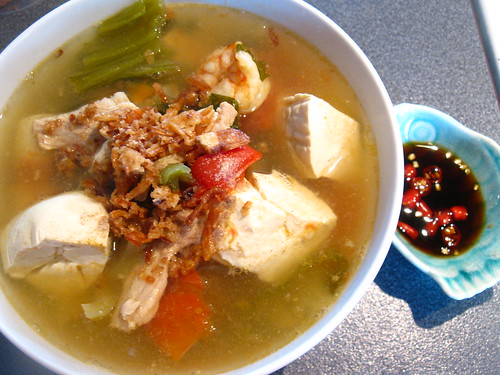
Salted Vegetable Seafood Soup


When I was working in Singapore, I used to like to 'tabao' or pack food back to the office so I can enjoy my lunch without joining the lunch crowd with a book. A little bit anti-social I must admit but lunch crowds in Singapore are quite a turn-off sometimes. One of my favourite item to tabao is a soup with some rice, and there was this stall in a coffeeshop at the end of Killiney Road that sells fish soup with rice that comes with a side of sambal and fried anchovies and egg. It was quite value-for-money too although the stall owner can be a bit 'cold' at times. So fast forward to life in Sweden now where there's no coffee shop to buy food from, this is a home-made version which is, besides knowing exactly what goes into the food is that you get to decide what 'liao' / ingredients to put in. And no extra charges for more vegetables or chilli!;)

IMG_0366

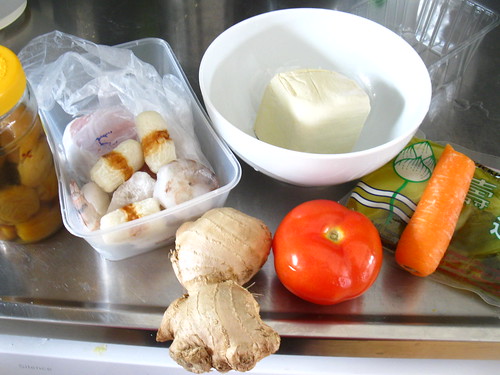
Ingredients (serves 2 or a greedy one person)

1 block of tofu
1 tomato
Half a carrot
Half a packet of salted vegetable or 'suan cai'
Choice of seafood (prawns, fishballs, fish roll or fish cake)
Choice of meat (chicken or pork or fish slices)
A thumb size knob of ginger
1 preserved sour plum (left-most in picture, you use it for steaming fish or cooking salted vegetable duck soup too)
Half a cube of ikan billis stock with enough water for a big bowl of soup or use home-made stock if you have
Pepper and fried shallots for garnish
IMG_0354

Steps

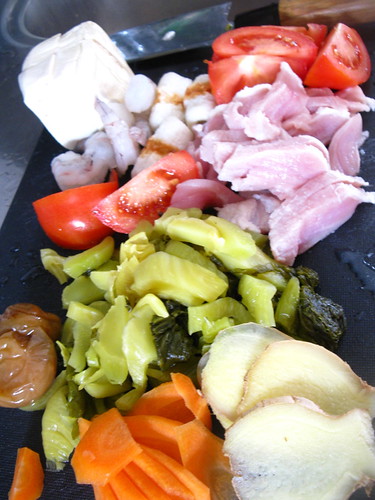
  1. Cut the tofu and tomatoes into quarters and slice the pork, ginger, carrots and salted vegetable.
    IMG_0359
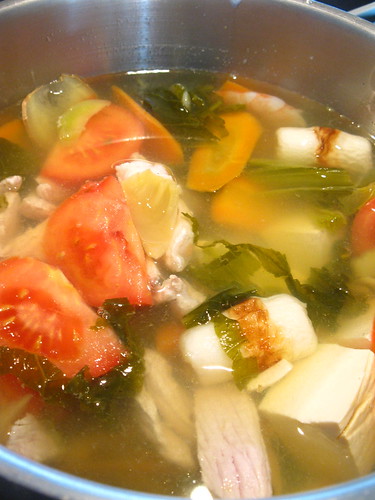
  2. Bring your stock or water with stock cube to boil before adding all the ingredients and let it simmer for about 10-15 minutes until all the ingredients are cooked through and tender. Adjust seasoning if required.
    IMG_0363
  3. As an alternative, you can turn this into a noodle soup by adding noodles or vermicilli into the soup. Otherwise, serve it hot with rice along with a side of chili padi.
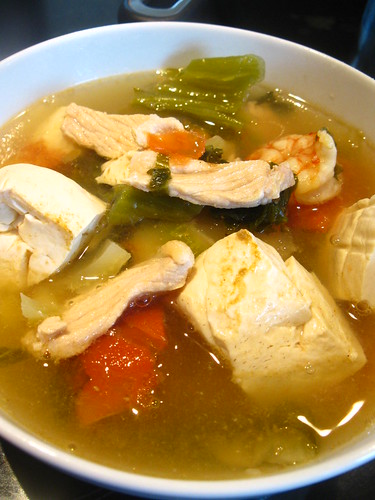
IMG_0365

Wednesday, August 1, 2012

Sambal Tofu Goreng (Without tempeh)

IMG_0395

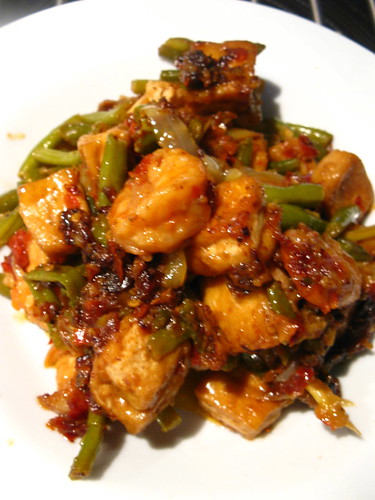
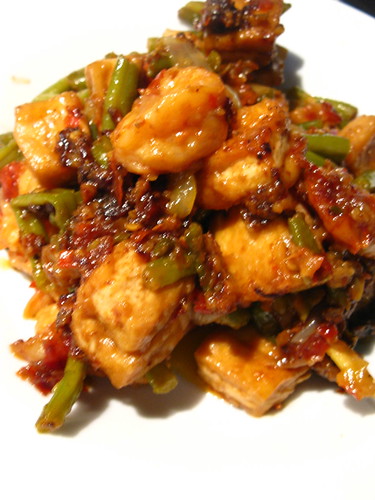
I've always liked Malay food and this is one of those dishes I like to order when I am at any Malay store and I've never thought about making it myself since one of the ingredients - tempeh is not available here in Sweden. I've contemplated making my own and even got a sample of the starter from http://www.tempeh.info/, but I haven't got around doing it yet. I promise I will do it!

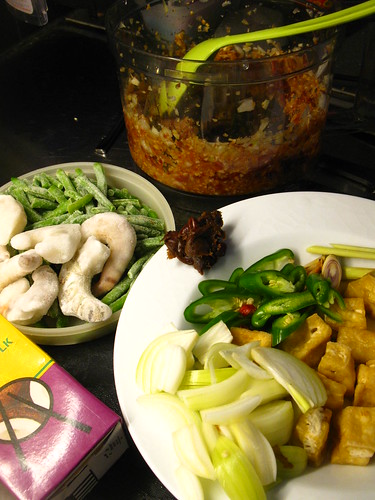
Ingredients
to grind
1 large onion
3 garlic cloves
8 dried chilli, soaked in hot water
1/2 thumb size galangal

for the dish
1 block of tofu, cut into cubes and deep fried until golden brown
1 large onion, sliced
1 lemon grass, sliced
1 large thumb size tamarind paste 
1 green chilli, sliced
6-8 prawns
a handful of green beans (I used the frozen kinds which works well in this dish)
1 box/can of coconut milk, about 160ml
salt and sugar to taste 

IMG_0386

Steps
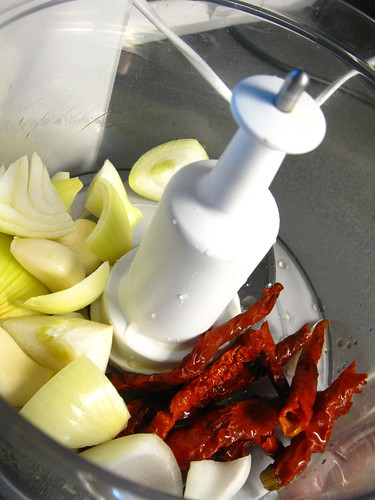
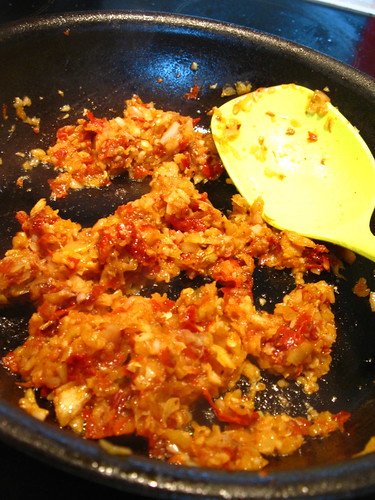
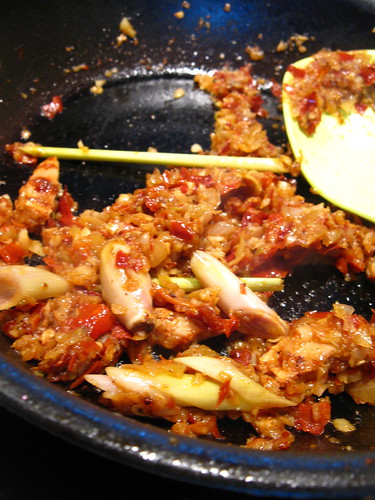
  1. Blend the ingredients stated above until fine and fry it with 2-3 tablespoons of cooking oil in a pan over medium heat until fragrant.


    IMG_0379

    IMG_0388
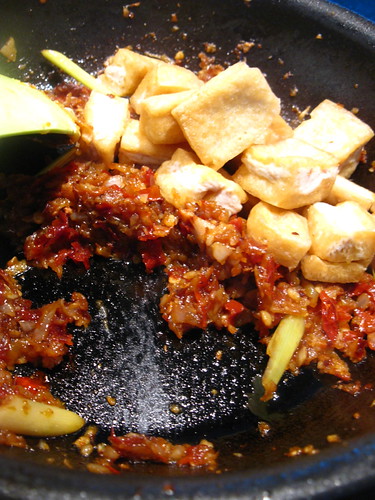
  2. Add in the lemon grass, and the fried tofu until well mixed.

    IMG_0389


    IMG_0390
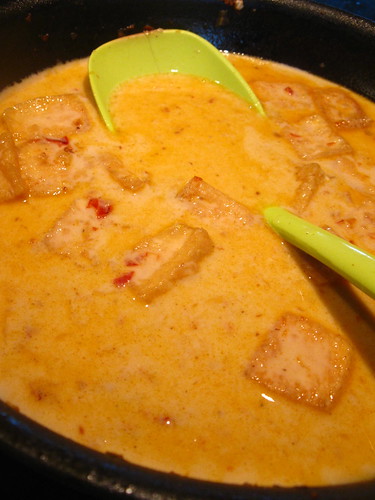
  3. Add in the coconut milk and let it simmer while you blend the tamarind paste with about 3 tablespoons of water, sieve to remove the seeds and add in to the pan.

    IMG_0391
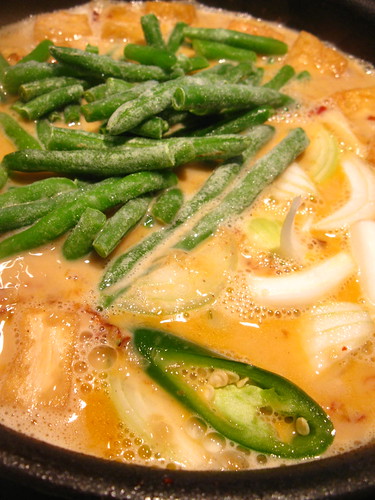
  4. Add in the rest of the ingredients except the prawns and turn the heat down to low and let it simmer until it is almost dry.

    IMG_0393
  5. Add in the prawns before it's done and cook it through, adding salt and sugar to taste. It should be slightly sourish sweet and spicy, with a sticky sauce coating the ingredients. Serve with rice.

IMG_0394

Monday, May 14, 2012

Sweet and Sour Fried Fish Fillet


Time pass by so fast and it's already the middle of May, and just two more days before my Dad and my sister comes to visit me in Sweden for the first time and to meet his grandson/her nephew too! My Dad promised to cook me many delicious food while he's here so hopefully some of those dishes will end up on this blog too. 

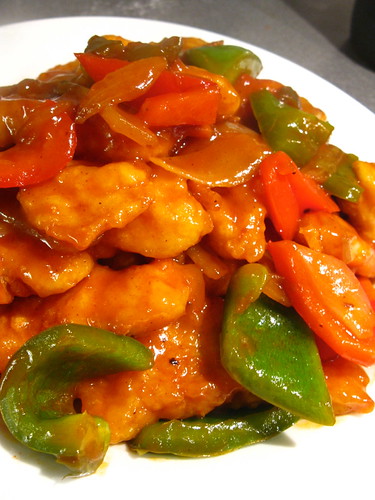
Motherhood has been very tiring but it doesn't stop the craving. I can't remember exactly when I cooked this (definitely not recently) but it's one of those dishes we will order when eating at a zi char store. This is my simple version of it and the fish I used was what they called 'pangsiu' on the package here. It's some kind of white , boneless, frozen fish fillet, which I'm sure would have tasted better with fresh fish if you can get them.

Ingredients
2-3 large white fish fillet, thawed
1 egg
1 tablespoon Shaoxing wine
salt and pepper
½ green bell pepper
½ red bell pepper
1 large onion
thumb size ginger
potato flour
oil for deep frying
4 tablespoons ketchup
3 tablespoons sweet chilli sauce
Water or stock 
A few drops of sesame seed oil

Sweet and Sour fried fish fillet Singlish Swenglish

Steps
  1. Slice the fish into large pieces and marinate it with the wine, salt and pepper and 1 egg. Coat it generously with potato flour to be deep fried.

    Sweet and Sour fried fish fillet Singlish Swenglish
  2. Fry the fish slices until golden brown, drain on kitchen paper and set aside.

    Sweet and Sour fried fish fillet Singlish Swenglish
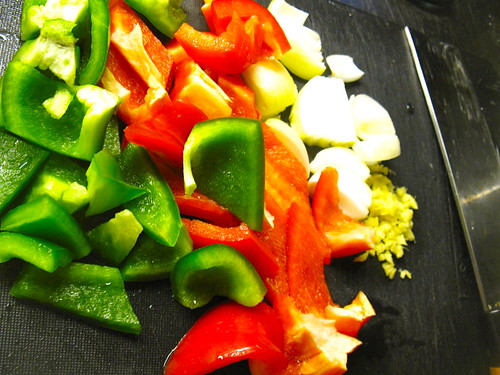
  3. Cut the bell peppers into bite size pieces and the onion into similar slices. Minced the ginger finely.
  4. Using a hot pan with about 2 tablespoons of cooking oil, fry the minced ginger and onions until fragrant, then add the bell peppers and mix well until slightly soften. Add in the ketchup and chilli sauce enough water or stock to create a thick gravy and bring it to boil.

    Sweet and Sour fried fish fillet Singlish Swenglish
  5. Toss in the fish slices and mix well. Mix in some sesame seed oil just before serving.

    Sweet and Sour fried fish fillet Singlish Swenglish

Friday, April 27, 2012

Stewed Bittergourd with Chicken

IMG_0093

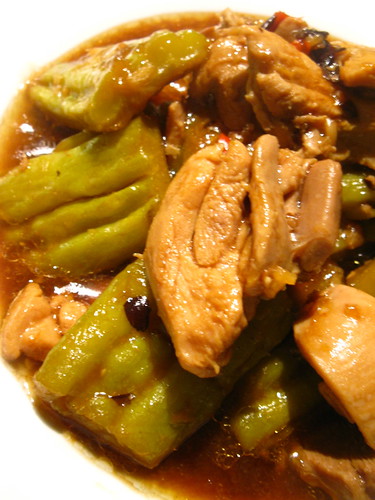
I first tasted this dish when I was giving tuition to my colleagues' kids as a favor for a period of time. Since we went directly after work to her mother-in-law's place, it was a blessing to eat good home-cooked food there. And every time I tasted something good, I will asked her how she cooked it, especially those I thought my Dad would like. It's simple but a good variation from the normal way of how bitter gourds are cooked.

Ingredients
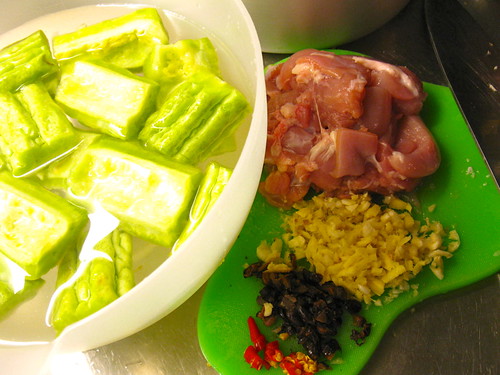
1/2 large bitter gourd or a small one, cut length wise into four and cut further into large chunks
1 boneless chicken thigh fillet, sliced into equal size as the bitter gourd
1/2 tablespoon fermented black beans, rinsed and chopped roughly
1 tablespoon finely minced garlic
1 tablespoon finely minced ginger
1 or 2 chili padi, finely minced (optional)
1 tablespoon oyster sauce
2 teaspoons dark soy sauce

IMG_0075

Steps
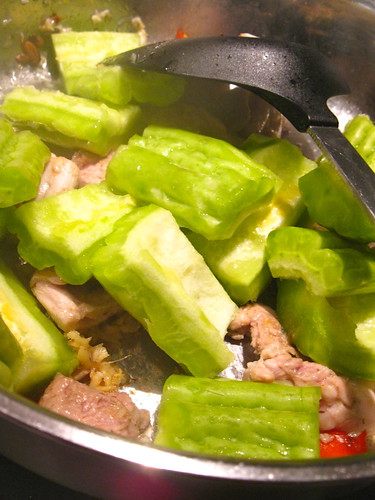
  1. Heat up about 2 tablespoons of oil in a hot pan and briefly stir fry the minced ginger, garlic, fermented black beans and chili until fragrant.
  2. Add in the chicken thigh fillets and cooked until just changed color.
  3. Add in the bitter gourd chunks and mix well. Add in the dark soy sauce and oyster sauce before adding enough water to just cover the ingredients.

    IMG_0078
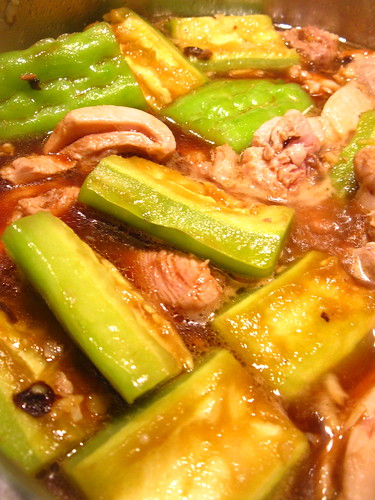
  4. Turn to medium heat to simmer for about 10 minutes or until bitter gourd is soft (or to your preference).

    IMG_0084
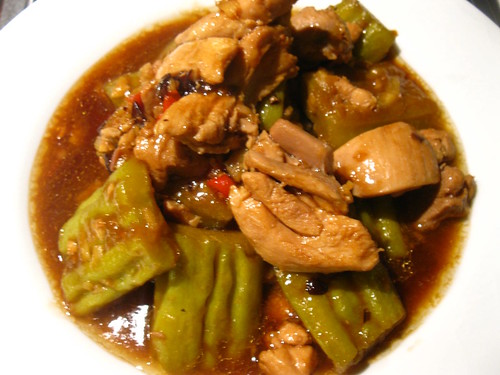
  5. Season with salt to taste before serving with rice.

    IMG_0087
 

Monday, April 2, 2012

Pig's Trotters in Sweet Vinegar Confinement Food

IMG_0308

In Sweden where it's not common to hire help after giving birth, I had to do my own confinement in my own way. What I discovered from many Chinese friends is that there are different ways how confinement is being done, and this dish is certainly more unique to South East Asian Chinese or the Hokkiens. I got a slow cooker or crock pot for my birthday from my in-laws (nice huh!) and used it to cook this for myself. It's a very simple recipe but the key thing is to use the correct vinegar - which is the sweet vinegar, identified by its name or one of the brand, Ba Zhen as shown in the picture. Contrary to belief, this dish can be eaten by anyone and is one of my Dad's favourite too.

Ingredients
1 pig trotter
1 large piece of ginger, about 200g
2-3 tablespoons of sesame seed oil
1 bottle of sweet vinegar
1-2 blocks of gula melaka
Hard boiled eggs (optional)

IMG_0290

Steps
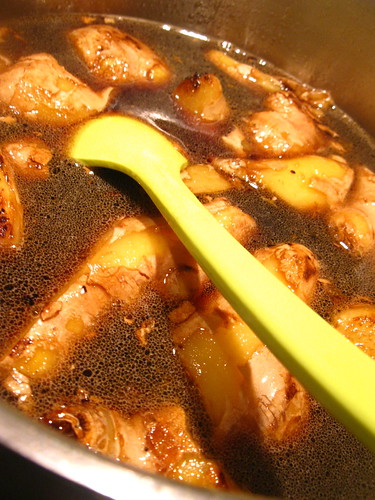
  1. The night before cooking, prepare the vinegar solution by crushing the ginger with a cleaver and place in a pot to fry without oil until dry before adding the sesame seed oil and fry until fragrant. Add the whole bottle of vinegar and let it simmer for 10-15 minutes. Let it cool overnight.

    IMG_0293
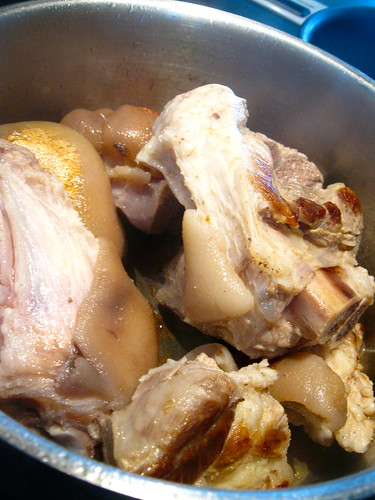
  2. The next day, scald the pig trotters in a pot of boiling water, rinse and drain. Heat up the pot with some cooking oil and brown the scaled trotters slightly.

    IMG_0294
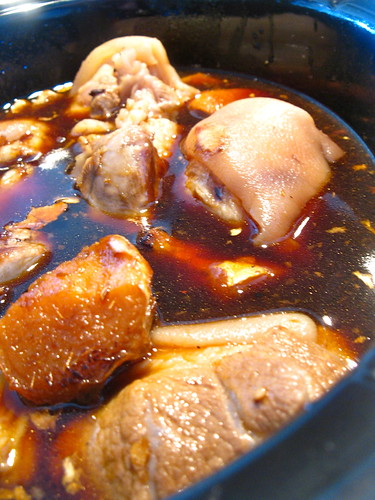
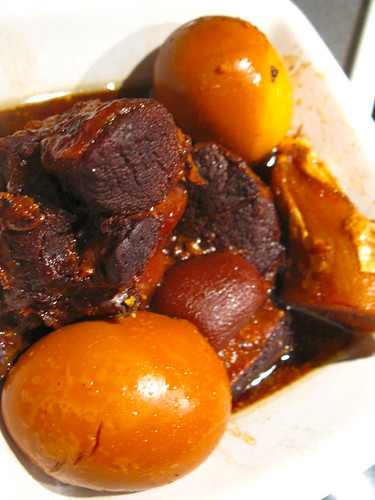
  3. Place the trotters, gula melaka and the vinegar solution together in the crock pot and let it cook on low heat for four hours or until the meat is falling off the bone. Add in the peeled hard boiled eggs half an hour before serving. Serve with rice.

    IMG_0301

    IMG_0310

Tuesday, February 21, 2012

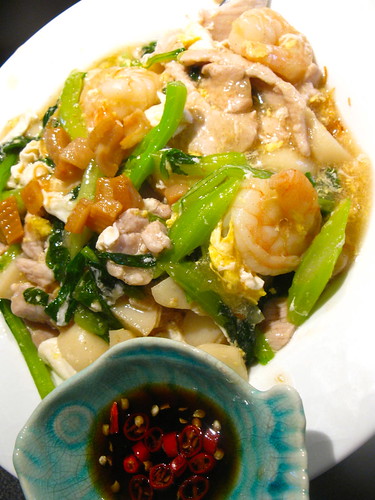
Bee Hoon Ze Char - Rice Vermicilli with Meat and Seafood Gravy

Bee Hoon Ze Char Singlish Swenglish

This could have been a healthy dish except for the addition of the fried pork lard, but without it, it taste oh so different. So indulge in them once in a while, especially when you are overseas with no Zi Char store to go and just buy them from. I did this with bee hoon, but you can chose to use egg noodles or hor fun or any noodles you fancy.

Ingredients (2-3 portions)
Fried pork lard (cut up the pork lard into large cubes as they will shrink and render them to crispy bits over medium heat until golden brown. Keep the oil for frying later or in other dishes too)
6 fishballs, cut into halves (you should use fish cakes if you can get them)
7-8 prawns
100g lean pork, sliced thinly
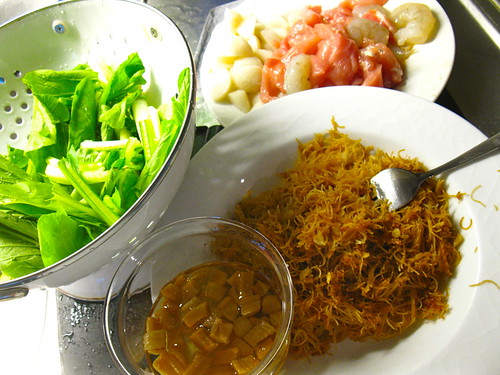
1 sheet of dried bee hoon, soaked in cold water to soften and drained
2-3 bunches of caixin or bak choy, cut into 2 cm sections
2 garlic cloves, minced finely
1 egg
2-3 teaspoons dark soy sauce
1 teaspoon chicken stock powder
white pepper
1 tablespoon soy sauce
1/2 tablespoon oyster sauce

Bee Hoon Ze Char Singlish Swenglish

Steps
  1. Marinate the prawns and pork with some white pepper and soy sauce while you prepare the bee hoon first.
  2. Over a hot wok, heat up 2 tablespoons of the oil you rendered from the pork lard and add in half the minced garlic, stir frying it quickly so it doesn't burn and add in the soaked bee hoon. Add in the dark soy sauce and mix well until it is evenly colored, adding a little water if necessary. It should still remain relatively dry as you will be adding the gravy over it when you serve.
  3. Once the bee hoon is cooked, place in a serving bowl and set aside. Using the same pan, add in 1 tablespoon of the oil rendered from the pork lard and add in the rest of the minced garlic.
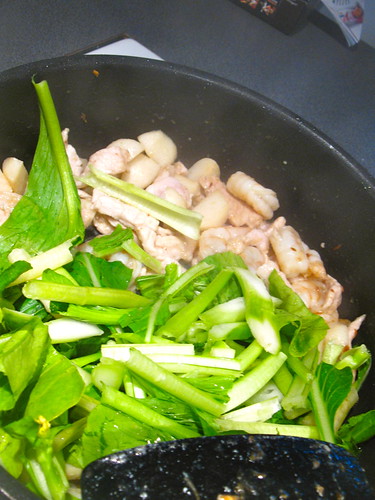
  4. When the garlic are slightly browned, add in the fish balls first and stir fry. Add in the prawns and pork next and fry until they are 80% done before adding the vegetables and mix well.

    Bee Hoon Ze Char Singlish Swenglish
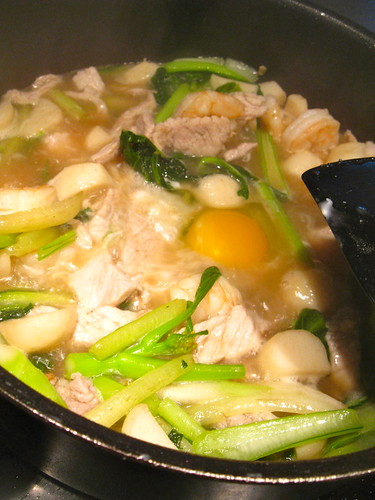
  5. Add in enough water to cover the ingredients and stir in the oyster sauce, chicken stock powder and some dark soy sauce for color if desire. Taste and adjust seasoning where necessary. Let it come to a boil before cracking an egg in the middle of the gravy and stirring it slightly to get those eggy whirls.

    Bee Hoon Ze Char Singlish Swenglish
  6. Once done, scoop over the bee hoon in and serve hot with some sliced chili padi or pickled green chili if you have prepare beforehand. Top it up with some crispy pork lard cubes and it might just bring you a bit closer to home.

    Bee Hoon Ze Char Singlish Swenglish

Sunday, January 29, 2012

Tau Sar Piah 豆沙饼 Mung Bean Paste Biscuit

Tau Sar Piah Singlish Swenglish

We welcomed our little one early this month and I must say, motherhood needs some getting used to! This is probably something I won't have time to do for the time being but I have had this craving for the Penang tau sar piah since when I went back to Singapore last July and I finally got some from Sylvia in a yummy package she sent to me with goodies from Malaysia when her hubby went back recently. I could have eaten them all in a day but restrained myself to spread them out over a week. They came to an end eventually and the only thing I could do is to finally try them out, as it was also one of my resolution for this year and good that I tried making them before the little one came along!  I didn't have any recipe of my own and followed the one from My Kitchen Snippets, so all credit to her. However, after making it I came to a few conclusions:

1) It's definitely worth it to pay for those good brands of this biscuit because it takes quite a lot of work.
2) It's not going to be as good as those famous brands but it suffices as a craving when you are overseas and not able to buy it readily.
3) Some people like it freshly baked, but I find it was better after sitting in a container for a day or two.
4) The bean paste filling needs a really good balance of seasoning, otherwise it will just taste strange. Having said that, I hope there is another way to make this filling next time so it doesn't taste as dry, be more savory and doesn't remind one of it being a green bean paste so much.

You can follow her blog which comes with detailed instructions and pictures, the following are my observations while making them. 

Ingredients
Oil Dough
175 gram Flour
100 ml vegetable oil

Oil & Water Dough
345 gram Flour
180 ml vegetable oil
135 ml water
¾ teaspoon vinegar

Mung Bean Paste:

50 ml vegetable oil
2 shallots - thinly sliced
150 gram sugar 
1 1/2 teaspoon salt
1 1/2 teaspoon white pepper
400 gram dried mung beans

Steps
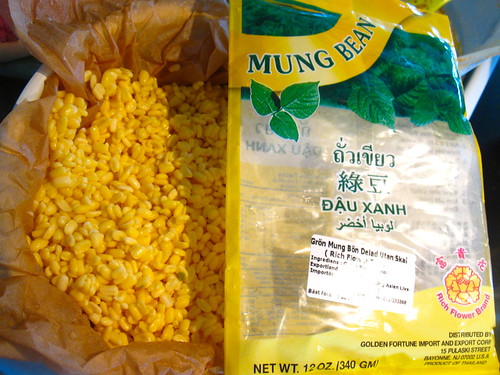
  1. Wash the mung beans a few times and let it soak for at least 4 hours or overnight. Drain and steam it for 30 minutes or until soft. (I took about 6-7 tablespoons out to try making tau saun separately this time round)

    Tau Sar Piah Singlish Swenglish

    Tau Sar Piah Singlish Swenglish
  2. While steaming, prepare the oil dough and the oil & water dough, cover and let it rest in separate bowls for at least 30 minutes.

    Tau Sar Piah Singlish Swenglish
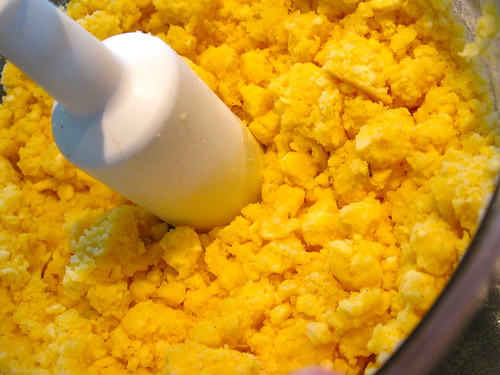
  3. Let the mung beans cool a bit before blitzing it it briefly in a food processor together with the sugar.

    Tau Sar Piah Singlish Swenglish
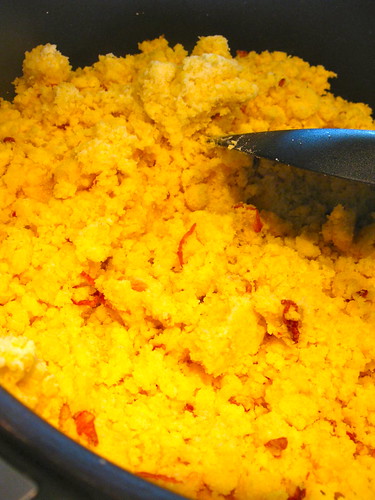
  4. Heat up the oil in a pan and fry the shallots until slightly brown before adding in the processed mung beans and add the rest of the seasonings, adjusting it where necessary.

    Tau Sar Piah Singlish Swenglish

    Tau Sar Piah Singlish Swenglish
  5. Don't fry it too long but you should be able to form firm balls about 9-10g each. If it gets too dry to hold well together, add some water. I formed about 60 balls of fillings.
  6. Divide the doughs each into 60 portions. I weigh each dough and divide each weight by 60 so I get a roughly equal amount of dough.

    Tau Sar Piah Singlish Swenglish
  7. Flatten the oil & water dough, using it to envelope the oil dough, forming a ball.
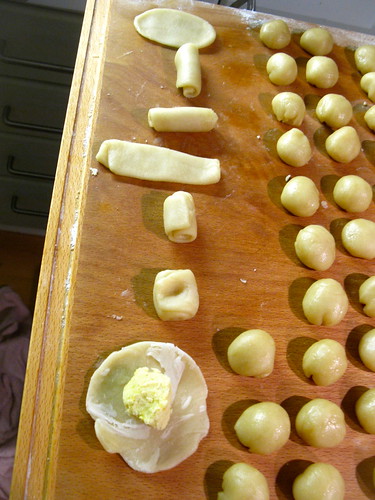
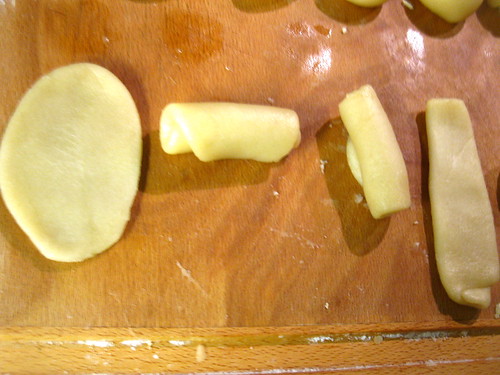
  8. Using a rolling pin, flatten the mixed dough ball once, then roll it up like a Swiss roll, and flatten it one more time . Roll it up again like a Swiss roll, pinch in the sides and roll it out into a rough round shape to place the prepared filling on (you might get some kind of thin 'skin' at this point of time when you roll out the dough but it's normal and not a mistake).

    IMG_3009Tau Sar Piah Singlish Swenglish

    Tau Sar Piah Singlish Swenglish

    Tau Sar Piah Singlish Swenglish
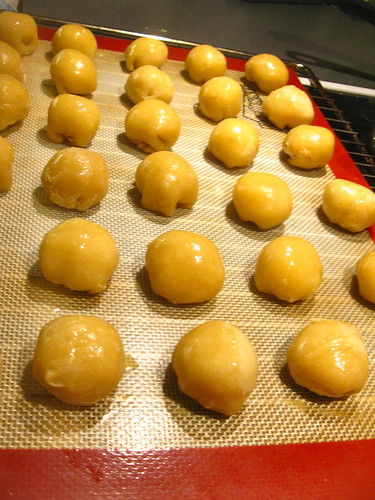
  9. Beat up one egg and use it to help seal the edges, resting the biscuit on a baking sheet on its sealed edge.
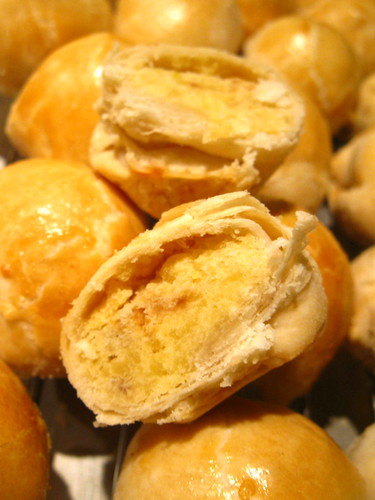
  10. Egg wash the top of the biscuits and bake it at 190°C for 15-20 minutes or until golden brown.
    Tau Sar Piah Singlish Swenglish
  11. Let it cool completely before storing it in an airtight container.
    Tau Sar Piah Singlish Swenglish

    Tau Sar Piah Singlish Swenglish